
Tagged: Movie review

Media Rewind Podcast – Denzel Washington.
Shooting the shit on this episode with Dustin and Jenius as we discuss some of the darker roles (and everything in between) of the great Denzel Washington’s legendary career. Thanks for taking the time to check it out; give it a listen, and enjoy!
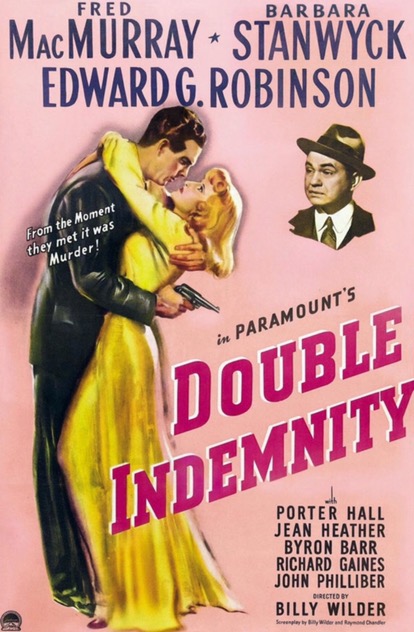
Theatrical Thursday – Double Indemnity (1944).
I’ve always said that some of the best movies can be seen on a quiet Saturday morning; there’s some good fertilizer in that crisp Saturday morning air that gives blossom to great movie viewing. It’s fun to catch a great picture from start to finish in the gray of the morning before the world wakes up, and before you owe the day any of your time, or anything to anyone. Some of the best films I’ve ever seen have been scoped on mornings just like that, free of burden, free of care, and with a surplus of time. When we were kids, my sister and I made it a goal to watch as many of the American Film Institute’s Top 100 films of all time in one summer; I can’t recall just how many we saw, but we gained some good ground while she was in town. One of my favorites from that summer was 1944’s Double Indemnity, starring Fred MacMurray and Barbary Stanwyck, so I decided to give that old classic a go this morning with my coffee.

Director Billy Wilder’s Double Indemnity is film noir at its finest; the dialogue was as thick and sultry as the lingering cigarette smoke, the script was as complex and detailed as the bourbon they drank, and the characters were as cool and slick and breezy as a mid May afternoon. The cinematography was a dimly lit tapestry of finely weaved shots that suffused the story with an air of gritty believability, and added a hefty and necessary dose of grim weight to the subject matter. The sturdy Fred MacMurray played Walter Neff, a hot shot top insurance salesman who fell instantly for the brazen and deceptively conniving Phyllis Dietrichson, played icily by Stanwyck. Neff falls hard for the allure of Mrs. Dietrichson, who convincingly lures the haplessly love struck Neff into a plot to knock off her husband after taking out a life insurance policy on him. The venerable Edward G. Robinson, star of a horde of gangster films and early Hollywood gems, played the feisty and meticulously detailed Barton Keyes; a remarkably intelligent Sherlock Holmes-esqe claims adjuster with a knack for sniffing out mischief.
The dark and brooding undertones of the film set a castle solid foundation of deceit, mystery, and intrigue that was so effectively present in the classics of the 40’s and 50’s, and earned the film seven Oscar nominations, including Best Picture.

Theatrical Thursday – Paths of Glory (1957).
Stanley Kubrick, a legendary filmmaker of great renown, has been at the helm of some of cinema’s most well-known and iconic pictures; who can forget Lolita (1962), Spartacus (1960), Dr. Strangelove (1964), 2001: A Space Odyssey (1968), A Clockwork Orange (1971), The Shining (1980), and Full Metal Jacket (1987)? His resume reads like a greatest hits list, the multitude of his work being critically acclaimed and pioneering in their own right. Quite possibly my all-time favorite Kubrick flick, though, is the utter masterwork that is Paths of Glory. Set in WWI, the film’s focus involves the trial of three men accused of cowardice in the face of the enemy after a failed assault on the enemy German positions. Kirk Douglas, a personal favorite, plays the role of French Colonel Dax, a visceral portrayal of a man tasked with defending the accused soldiers, who all face death by firing squad. His character faces the daunting task of proving the unwavering character of his men, while facing the impossible brutality that was WWI.
The film itself is wrought with a tension befitting the backdrop of one of the world’s most brutal conflicts, with themes of honor, duty, nationalistic pride, greed, betrayal, family, and idealism laced tightly within. The stark realism on display in the raw and gritty set pieces and the intricately placed details add to the brilliant performances of the actors. The grand scale of the set captured the sheer scope and intensity of the conflict, and the dramatic, solemn tension vividly captured the perilous plight of the condemned men. An outstanding achievement in film from a director and cast known for their remarkable performances.
Check it out!
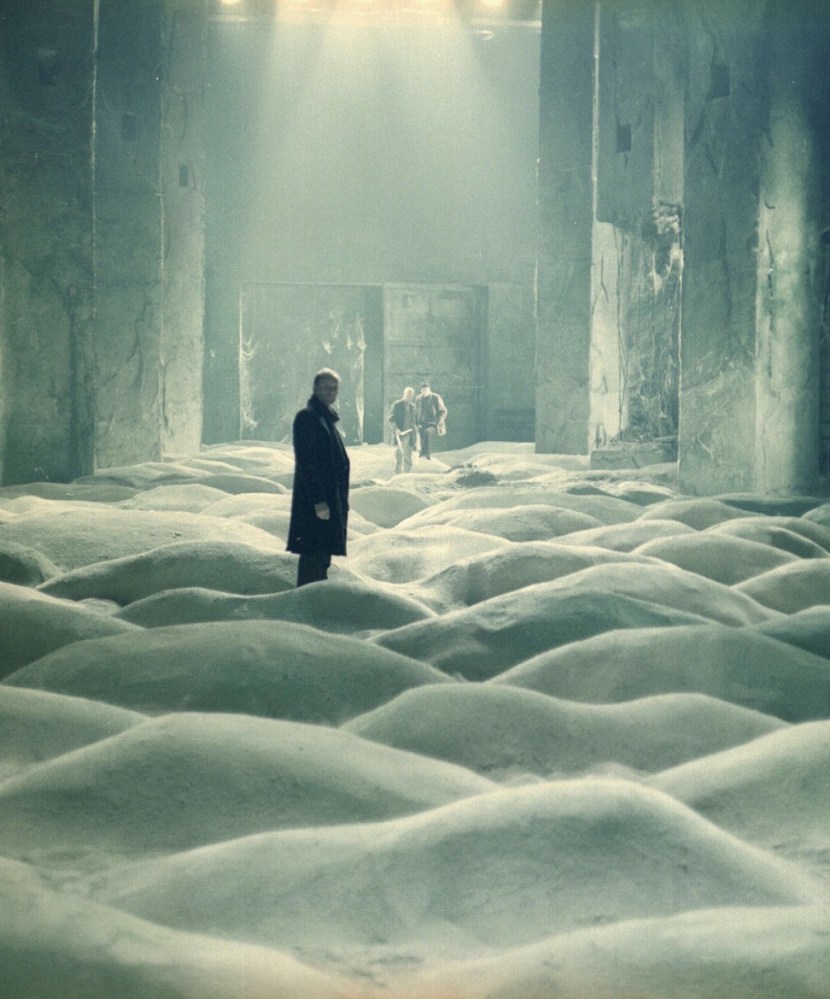
Theatrical Thursday – Stalker (1979).
I’d fallen asleep on the sofa in front the TV one Friday night (years ago) and awoke on Saturday morning to this mysteriously surreal little Russian gem, a dreamy, thought provoking tale guaranteed to drum up a few intelligent discussions about man’s quest for knowledge and his insatiable hunger for the unknown. Directed by legendary filmmaker Andrei Tarkovsky and adapted from the novel Roadside Picnic, it deftly explores the depth of human want and need and desire, and trails the journey of a Stalker (a hired guide) and the two men who call upon his expertise to lead them into the gritty bowels of “The Zone”. It is there that they intend to enter the fabled room within the ruins of The Zone that enables any wish to come true. The journey is not without its trials though. To gain entry into The Zone (a deserted city that fell victim to a mysterious incident), they must first bypass a thickly guarded military checkpoint; but the true challenge is navigating the desolation of The Zone itself, an entirely barren, ever changing landscape full of unseen and unbeknownst dangers that have tested the will, searched the souls, and claimed the lives of countless Stalkers and wish seekers.
A beautifully minimalist film, shot in unfortunately toxic, abandoned Russian industrial locations, is said to have contributed to the early cancerous deaths of several cast and crew, including the director Tarkovsky. But the often several minutes long takes, the haunting landscapes, the telling score, and the philosophically rich dialogue combine for a journey that will not soon be forgotten.

Media Rewind Podcast – Heat (1995).
Take a listen as Dustin and I discuss the in’s and out’s of Michael Mann’s 1995 legendary American Classic, Heat, on the Media Rewind Podcast.
 musings at random.