From the Vault.

Originally posted on 3-21-11, this piece is a simple reminder that, amid the challenges and stressors of life, anything remains possible to those whose spirits remain strong and steady.  Our outlook and perceptions of life affect our outcomes…stay positive, stay determined, and stay focused, and everything will be within reach.  And above all, let’s strive to develop an awareness of ourselves; that journey will always bear fruit!  Enjoy…and don’t forget to live today. 

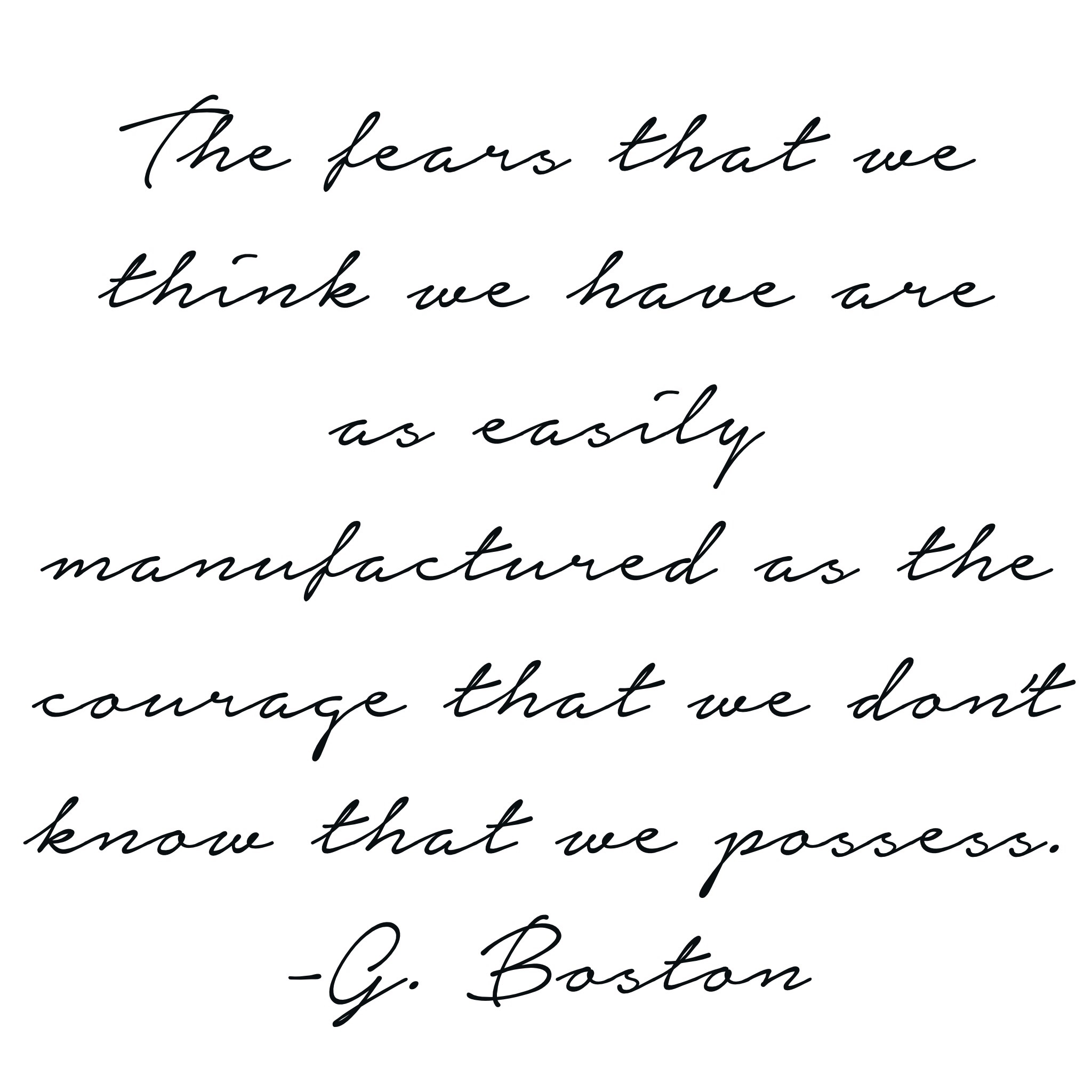
I could have climbed the highest

peaks and 

trudged up frozen mountains, relying

on hardened grit and steely determination.

I could have sailed the high seas,

adrift on those deep waters,

depending on courage and endurance.

We tend to say we ‘could have’, as if

we are already dead,

or as if we have no choice.

We tend to reference our dreams as random

images that only occur when our

eyes are closed, and

we tend to say no before we’ve even

considered yes.

Our ship sinks before it ever tastes

the thrill of the wind, and before it 

has ever tasted the salt of the sea.

I say that I could have explored the depths

of dense jungles and remote lands,

which is true,

but I have explored the depths of my

own soul.

I’ve trekked the high hills and low valleys

of my mind,

and swam with the wayward memories within

my heart.

And what a journey that has been.

We could spend a lifetime staring

out of the window-

pondering how our lives could be,

or could have been,

wishing a life out of thin air,

and being disappointed when

our stunted efforts lead to mist and dust, but

most never strap on the boots and

ascend those frozen rocks.

Most never raise their sails high into

the unknown wind-

most never step foot into the thick tangle

of lost jungles,

and most fail to discover the uncharted

territory that lies just beneath our skin.

And our desires slowly slip away beneath

the regions that we’re unwilling to

discover,

those darkened corners that we’re afraid to

traverse-

and we wonder.

We sit-

We wait-

We die,

having never known the true warmth of

the sun.

I could have climbed the highest peaks,

but I know that I still can.

Until then, I find satisfaction knowing

that I’ve mastered the rapids of my own heart,

crossed the glades of my own soul,

and swam with the thoughts that linger

in my mind*
-G. Boston 

Theatrical Thursday – Harakiri (1962).

Harakiri is a slice of 1962 Japanese cinematic brilliance; the story of an old ronin (masterless samurai) who falls on hard times. Samurai were the masters of their craft, skilled in fighting techniques as well as the arts; during times of peace though, the fighting skills that earned them a living were useless. They were laid off, unemployed, and cast out into a world possessing a talent that was no longer needed. We are confronted with a challenged world at the moment, and the skills that we may have earned and acquired over the years could potentially be outdated, useless, or unneeded. Like the main character’s clear headed approach to this predicament, it’s important in times such as these to keep a clear, level outlook, and to be thankful for what we have and are able to do. So in many ways, this film hits home, and the overall message translates somewhat well.

In the film, lack of employment is a major factor and the driving force behind the motives and actions of the main character. He is a widowed former warrior who is forced to construct umbrellas as a means of supporting his daughter, son in law, and grandson. He is essentially destitute as a result of repeated attempts to make ends meet; the skills that he obtained through years of training are no longer of use, as there is no need for for them in a time of relative peace. In today’s world, I see a few loose similarities between having a degree and having warrior skills during peacetime; unemployment is so strikingly severe and widespread these days, that a degree provides no guarantee of employment. It didn’t matter how adept a samurai was back then, and it generally doesn’t matter how educated a job seeker is now. In the enclosed film trailer, the main character states, “This thing we call samurai honor is ultimately nothing but a facade”; is the tradition of collecting a university certificate indicating that one has completed a series of courses also a thin facade? Again, a very loose correlation, but still food for thought! Nonetheless, Harakiri is a very weighty, masterfully directed and acted film, more than worthy of your time.


Check it out!


From the Vault.

Originally posted back in 2011, this piece candidly portrays the passage of time, as our yesterdays, todays, and tomorrow’s reveal their distinct importance and influence upon our lives.  Each element holds a wealth of information, and each has a profound impact. Enjoy!
“Tomorrow is always the same”, today whispered

to yesterday,

and yesterday replied with a faint, flat smile;

leaves glistened in the crisp autumn breeze

as they discussed the significance of

hours and years,

time and eons,

the past and the present-

“tomorrow is actually what you make it”, today remarked

to yesterday after a long pause,

and both agreed in kind.

Tomorrow nodded in acceptance and mentioned

to today that yesterday should not be leaned

upon completely,

for today was the leader of the pack-

tomorrow said, “without you, I would not exist”;

“your efforts influence my outcome”-

but he pointed to yesterday and insisted

“you are equally important”, he said, “because

without you, today would not exist.

Without your intentions, he would not react-

without his reaction, what could I reveal?”

“we need each other”,

they all unanimously agreed-

“when we work in tandem, a strand of peace

weaves itself within and between us, and life

ensures that we will stride forward intact”-

they all nodded in agreement.

-G. Boston

Theatrical Thursday – The Killer (1989).

Action and violence were hallmarks of 80’s cinema; the sweepingly realistic tone of the 1970’s gave way to the over the top action narratives of the early to mid 80’s, which in turn led to the increasingly violent tones of the late 80’s and early 90’s.  Elaborately staged shootouts, the ‘one man army’ phenomenon, astronomical body counts dripping with gore, and the gritty cop theme were all huge theatrical elements that gained remarkable popularity.  Hollywood films were flush with aggressive action pictures, but Hong Kong had its own thriving film industry, and its own cache of bankable stars.  John Woo led the pack of filmmakers, producing such critical masterpieces as Hard Boiled, and A Better Tomorrow, and the ruggedly smooth Chow Yun-Fat, seemingly born with two guns in his hands, was his preferred leading man.

The Killer is the story of Triad hit man Ah Jong (elegantly played by Chow Yun-Fat), who accidentally blinds a singer during his final hit; afterward, he frequents the club where she performs, and they slowly develop a friendship. He eventually accepts one final job in order to cover the cost of a corneal transplant to save her eyesight. The film is riddled with thrilling car chases, brutal games of cat and mouse, ambushes, spectacularly bloody shoot outs, and the mutual respect earned by the dogged detective that is hot on Ah Jong’s trail.

Men of Distinction – George Bridgetower (1778-1860)

A product of mixed parentage (his father was likely from Barbados, and his mother from Germany), George Augustus Polgreen Bridgetower was born in Poland in 1778 and became one of the foremost violinists in Europe at the time, studying under esteemed tutelage, playing alongside Beethoven, and performing regularly in the famed concert halls.  
In his youth, he gained a favorable reputation performing in England and France, and the British Prince Regent, George IV, took him under his wing; under this assistance, he studied alongside several respected musicians and performed extensively.  

While in Austria, he met and played with Ludwig van Beethoven; Beethoven was so taken by his skill that he dedicated his Violin Sonata No. 9 in A major to Bridgetower. After the piece was performed for the first time, in 1803, Beethoven gratefully gifted his tuning fork to Bridgetower. The friendship was short lived, however. Bridgetower allegedly insulted a woman who happened to be Beethoven’s friend, and as a result, Beethoven severed their relations and re-dedicated his sonata, previously dedicated to Bridgetower, to violinist Rudolph Kreutzer. Kreutzer himself never played the piece, deeming it too difficult, according to contemporary accounts. 

Bridgetower later returned to England, married, joined the Royal Society of Musicians, attended Trinity Hall (earning his degree of Bachelor of Music), and continued to perform extensively. A talented musician unfortunately relegated to the dusty footnotes of history (his name would have been undoubtedly well remembered had Beethoven’s sonata continued under the title of Bridgetower Sonata), although his skill as a virtuoso earned him much renown in his era.
Look him up!


Poems from the Vault.

Originally posted on 10-8-12, this poem is a little reminder that there is hope at the end of every dark tunnel, no matter how small or insignificant it may seem.  The key is to keep moving forward; pushing, clawing, grinding…whatever it takes, until your eyes can see clearly once more.  Always reach out to those going through troubles; lend a helping hand, and make a point to uplift rather than put down.  Make an effort to find your peace…and help others discover theirs.  And remember to never fear the journey.
Twenty years imbalanced.

Twenty years spent roaming the stillness and

bedding down in a locked room.

Twenty years imbalanced-

a steaming brew boiled within those walls,

bubbling over and staining the pot with its

drippings.

Bubbles rose to the surface and exploded

into nothing-

spirits rose and fell like ocean tides,

and emotions rode those waves like daring

surfers in search of that unattainable thrill.

Thoughts and hopes and dreams appeared and

dissipated like gobs of rain under a hot sun-

twenty years imbalanced-

parched and afloat, drifting along choppy seas,

surrounded by irony, and unable to take a sip-

the know how just wasn’t yet there,

so he treated himself like a book,

and became an encyclopedia-

detailed, methodical,

and yet dusty and unread,

his pages stained with longing and mystery.

He learned to read himself, word for word,

until a detailed silhouette materialized.

A volume was left open on a table one

morning,

close to an open window-

a ripe plum purple morning, threaded

with the orange mists of dawn, and streaked

with whispering winds-

winds that meandered through the window and stirred

the sediments of dust and waste…

an eager gust crept along the table and

managed to turn a page…

Twenty years imbalanced.

Twenty years unsteady, unguided, unheard-

twenty years locked behind silent, mirrored walls,

examining and learning the words of himself-

the opening of that window flipped a page,

just a random page,

with a new one resting calmly beside it-

a new chapter-

waiting eagerly under

the brilliance of the rising sun*