
Tagged: life
7-23-16

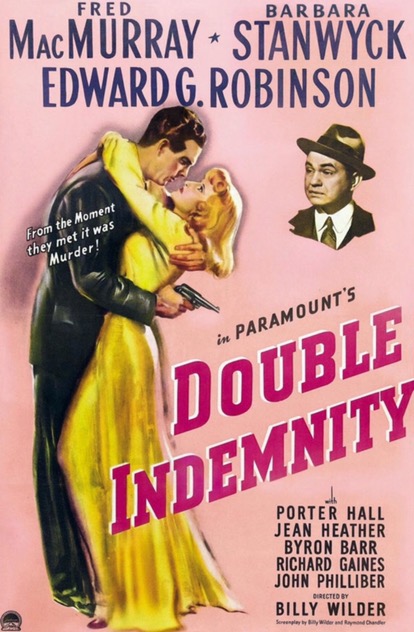
Theatrical Thursday – Double Indemnity (1944).
I’ve always said that some of the best movies can be seen on a quiet Saturday morning; there’s some good fertilizer in that crisp Saturday morning air that gives blossom to great movie viewing. It’s fun to catch a great picture from start to finish in the gray of the morning before the world wakes up, and before you owe the day any of your time, or anything to anyone. Some of the best films I’ve ever seen have been scoped on mornings just like that, free of burden, free of care, and with a surplus of time. When we were kids, my sister and I made it a goal to watch as many of the American Film Institute’s Top 100 films of all time in one summer; I can’t recall just how many we saw, but we gained some good ground while she was in town. One of my favorites from that summer was 1944’s Double Indemnity, starring Fred MacMurray and Barbary Stanwyck, so I decided to give that old classic a go this morning with my coffee.

Director Billy Wilder’s Double Indemnity is film noir at its finest; the dialogue was as thick and sultry as the lingering cigarette smoke, the script was as complex and detailed as the bourbon they drank, and the characters were as cool and slick and breezy as a mid May afternoon. The cinematography was a dimly lit tapestry of finely weaved shots that suffused the story with an air of gritty believability, and added a hefty and necessary dose of grim weight to the subject matter. The sturdy Fred MacMurray played Walter Neff, a hot shot top insurance salesman who fell instantly for the brazen and deceptively conniving Phyllis Dietrichson, played icily by Stanwyck. Neff falls hard for the allure of Mrs. Dietrichson, who convincingly lures the haplessly love struck Neff into a plot to knock off her husband after taking out a life insurance policy on him. The venerable Edward G. Robinson, star of a horde of gangster films and early Hollywood gems, played the feisty and meticulously detailed Barton Keyes; a remarkably intelligent Sherlock Holmes-esqe claims adjuster with a knack for sniffing out mischief.
The dark and brooding undertones of the film set a castle solid foundation of deceit, mystery, and intrigue that was so effectively present in the classics of the 40’s and 50’s, and earned the film seven Oscar nominations, including Best Picture.

7-20-16

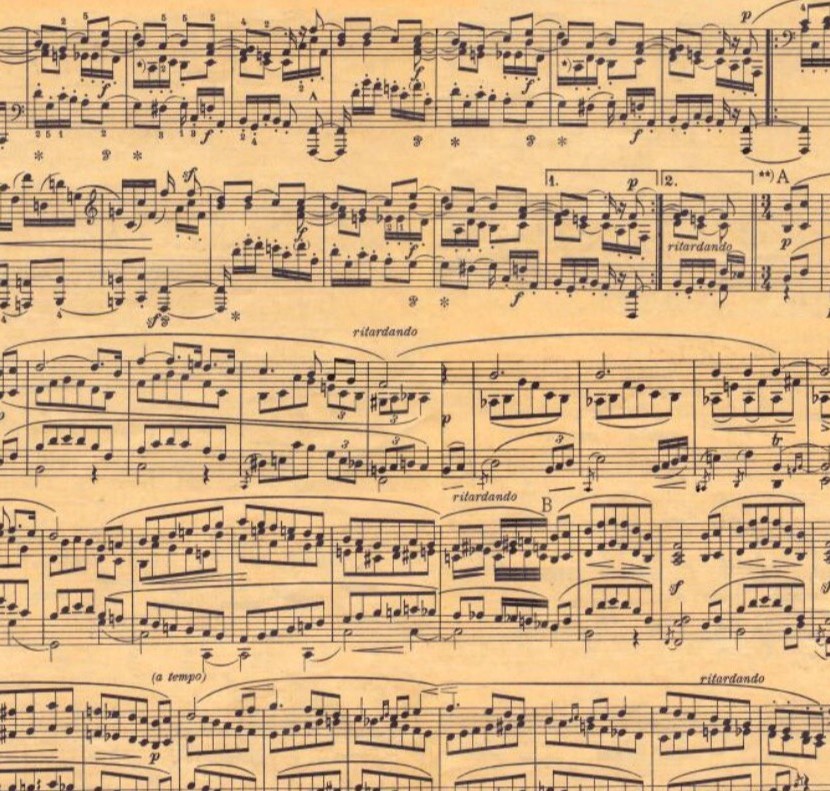
Musical Monday…on a Tuesday, featuring Tan Dun and Donny Hathaway.
Someday We’ll All Be Free – Donny Hathaway
Longing – Tan Dun & Itzhak Perlman, from the Hero original score

7-19-16
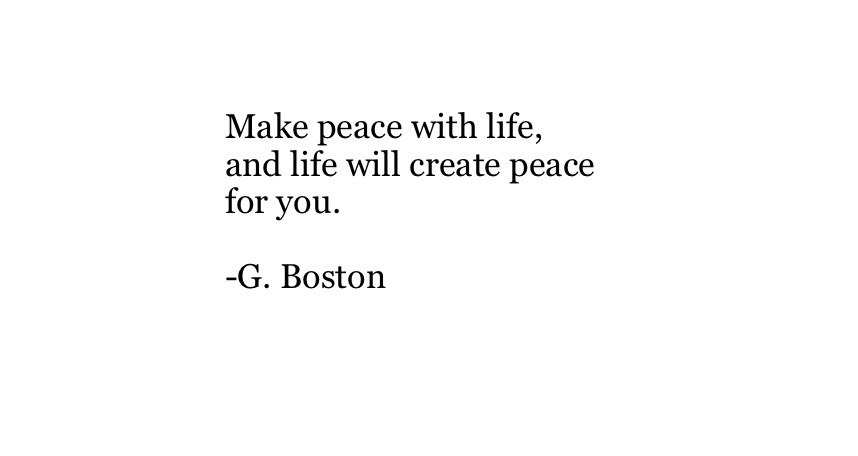

A Slice of Asian Poetry.
‘When you look at the moon in Wu-Chow, think of me one thousand li distant.’ – Li Po
‘In fall, the willow tree recalls its bygone glory.’ – Namagusai Tazukuri

7-17-16


Theatrical Thursday – Hell’s Angels (1930).
There’s nothing quite like the feel of the early classics; the attention to sharp dialogue (even if it was laced with gooey mozzarella), the richly layered intensity of the orchestral scores, and the overly dramatic stage-esque acting style combined with a precision lacking in so many of today’s films. I set my sights on Hell’s Angels this morning, the 1930 Howard Hughes masterwork. Hughes, the notorious perfectionist and eccentric in later life, directed and produced the piece at a cost of nearly 4 million dollars, which was the most expensive film production ever made at the time. But I have to say that the money was well spent; the attention to detail and the immensity and daring creativity of the aerial combat shots made for an exhilarating viewing.


The story tells the tale of two brothers, Roy and Monte Rutledge, (James Hall and Ben Lyon respectively), and their high flying exploits as pilots in Britain’s Royal Flying Corp during WWI. Austere Roy contrasted with Monte, who was quite the lecher (Monte joined the corp just to get a kiss from a girl at the recruiting post), but the two went on to serve in the conflict. Roy is deeply in love with Helen (played by Jean Harlow), who isn’t quite who she appears to be, but his love for her plays a pivotal role in the story. The production was originally filmed as a silent picture, but the advent of sound technology led the crew to re-shoot most of the movie using this new technique. Nearly 100 WWI pilots were brought in to fly the planes, with three of them crashing and dying during the filming. The film makes use of groundbreaking aerial camera work and features some of the most thrilling scenes of mock aerial combat filmed; the extent of the scenes is truly remarkable for the era, as quality WWI dogfights are a rarity. Had the film been made today, 90% of it would have been done with CGI, so it’s great to watch a picture with real guts and mechanics. An exciting film done in the old, big Hollywood style, it’s definitely worth a watch even if you’re not a fan of old war movies. If you are, you’d better get on it ASAP.

Men of Distinction – Walter Tull (1888-1918).
Born to a Barbadian carpenter and an Englishwoman, Tull was a renown professional soccer player (having played for Tottenham Hotspur and Northampton Town), and was the first black commissioned infantry officer in the British Army. Upon the death of his parents, young Tull was sent to an orphanage along with his brother, who interestingly enough, became Great Britain’s first black practicing dentist. Tull’s soccer career flourished, making many first team appearances for his clubs before he enlisted in the infantry at the outbreak of World War I.
Tull distinguished himself on the battlefield, and was commissioned as Second Lieutenant in 1917, despite the British Army forbidding persons of color to hold such rank. He fought in 6 major engagements, was noted for gallantry, and was recommended for a Military Cross. Tull was killed in France in 1918, just 8 months before the war’s end.
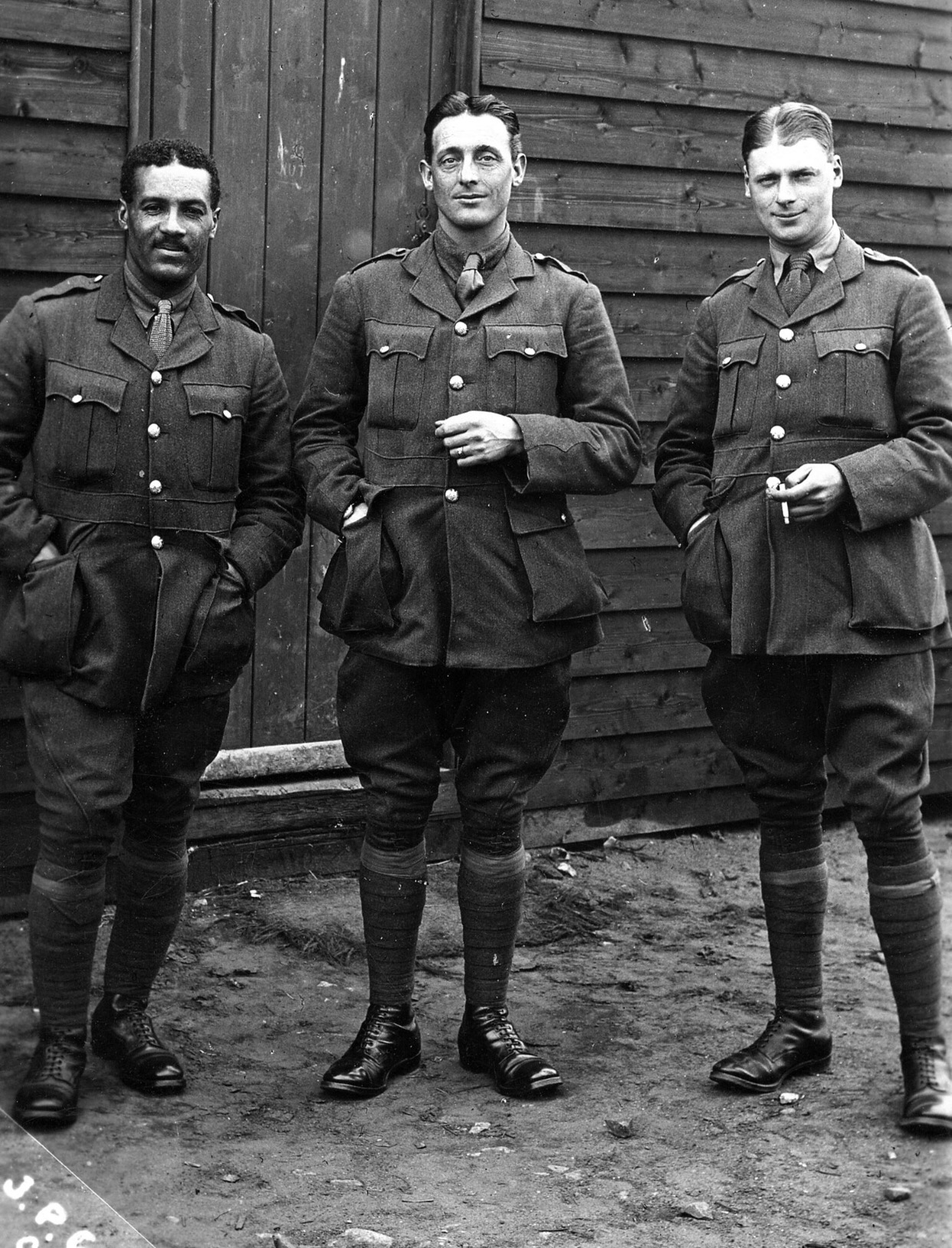
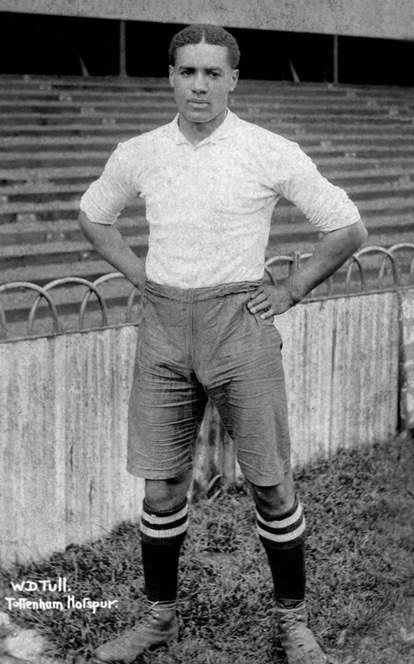

Look him up!

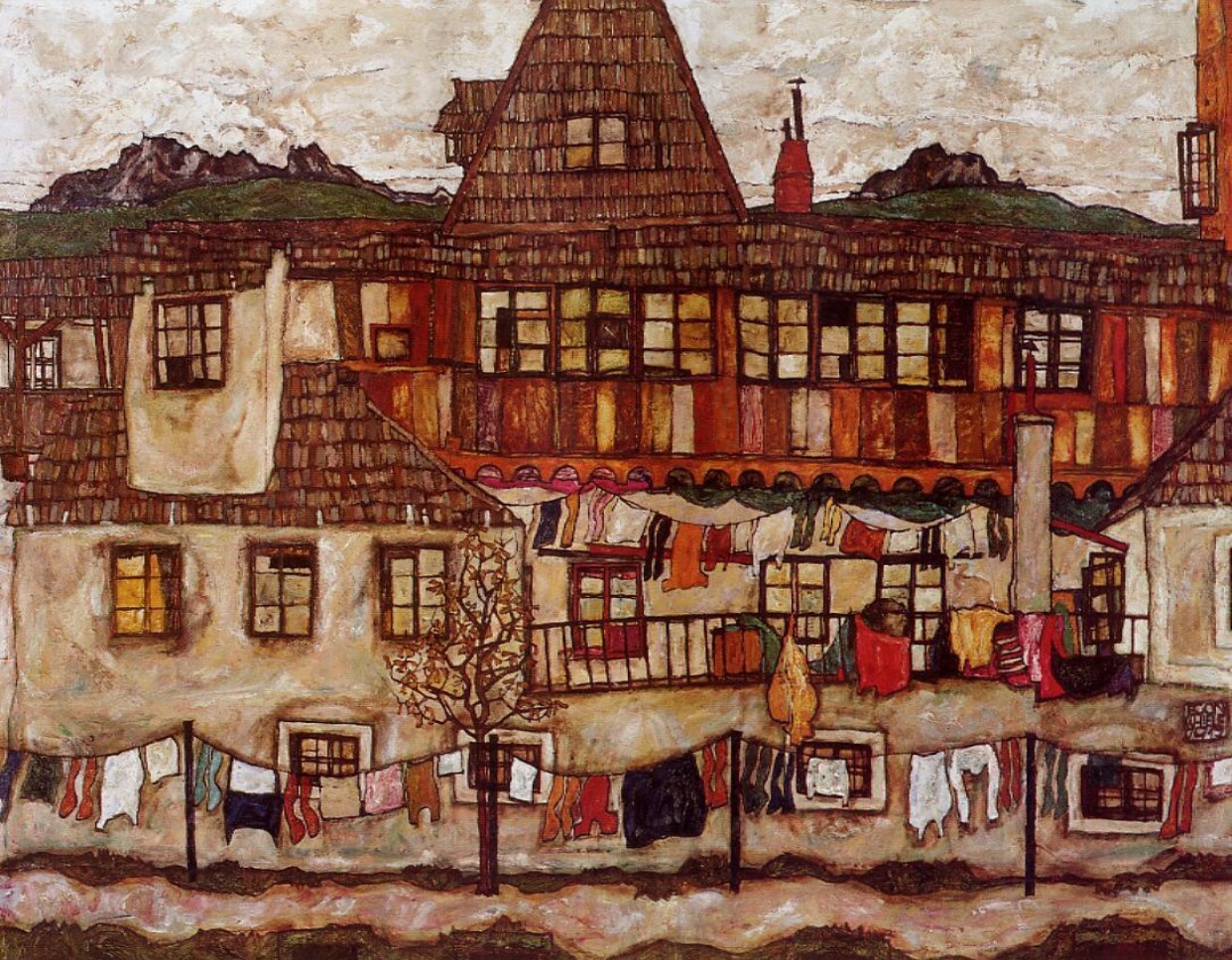
Essential Egon – House with Drying Laundry.
House with Drying Laundry, 1917.
 musings at random.